
Indian Women's Hockey: Fifth, But It Felt Like Much More

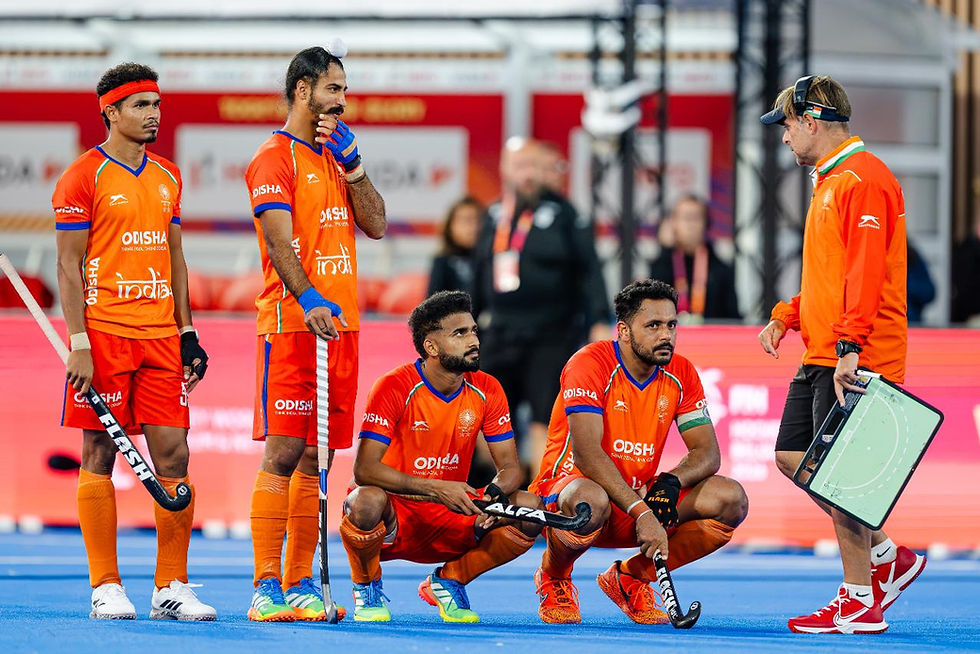
Image: Hockey India
India’s women did not win a medal at the 2026 Hockey World Cup, but their fifth-place finish showed that this is a team capable of competing with the best.
There are tournaments where the final position tells you almost everything. And then there are tournaments where you have to look beyond the table.
For the Indian women’s hockey team, the 2026 World Cup belongs to the second category. India finished fifth in Belgium and the Netherlands, their best World Cup finish in 52 years. The last time India had finished higher was in the inaugural Women’s World Cup in 1974, when they came fourth.
But more than the fifth position, it was the way India played that should give us hope. Six matches, two wins, three draws and just one defeat - and that only defeat came against the Netherlands, the defending champions and one of the strongest teams in world hockey.
For a team ranked ninth in the world before the tournament, that is some achievement.
India started their campaign against China, a team that has become one of the strongest sides in Asia and world hockey.
The 2-2 draw was important. India could have won the match how they played first two quarters. At a World Cup, particularly in a difficult group, avoiding defeat in the opening game matters. Then came the match India simply had to win. Against South Africa, India were much more expressive. The 6-1 victory was India's biggest win at a Women’s World Cup and showed another side of this team. Navneet Kaur was outstanding and India attacked with much more freedom. But the real examination came against England. India needed a result to move forward, and England put them under enormous pressure, particularly in the second half. England earned 12 penalty corners. India conceded from none of them.
That probably tells you more about this team than any other statistic from the tournament. The 0-0 scoreline might look uneventful on paper. On the field, it was anything but that. Savita and Bichu Devi were excellent in goal. The runners were brave during penalty-corner defence, while captain Salima Tete also produced important blocks. When England pushed numbers forward and even removed their goalkeeper late in the match, India somehow kept the door shut. That defensive performance took India into the next stage. If there was one major positive from this World Cup, it was India's defensive organisation. This was not simply about the goalkeeper making saves. India defended as a unit. The forwards worked back. The midfield closed spaces. The defenders protected the central areas around the circle. Most importantly, when India came under sustained pressure, the structure did not immediately collapse. That was evident again against the Netherlands. India lost 2-0, but the score itself needs some context. The Dutch dominated large periods and created enormous pressure, but both their goals came from penalty corners. India refused to allow the match to become a rout. Against a Dutch side capable of destroying opponents once they find momentum, keeping the game competitive was itself an indication of how far this Indian defence had come. Savita's experience remained extremely important, while Bichu Devi once again showed why India have two quality goalkeepers. It also allowed the younger players around them to play with greater confidence. Then India faced Asutralia. This is the match India will probably think about for a long time. India needed to beat Australia to reach the semi-finals. The match finished 0-0. India were not outplayed. They were not hanging on desperately for a draw. They had opportunities to win the match. India earned nine penalty corners. They converted none. And there lies perhaps the biggest lesson from this World Cup. At the highest level, creating opportunities is not enough. You have to finish them. India had shown against England that they could survive 12 opposition penalty corners without conceding. Against Australia, they found themselves on the other side of the equation. Nine opportunities from penalty corners came and went. The defence had done its job again. Australia did not score. But India couldn't score either. India scored 11 goals during the tournament, seven from open play and four from penalty corners. The overall penalty-corner conversion rate was just over 21 per cent.
It wasn't disastrous, but if India want to become a regular top-five side, this is one area where improvement is necessary. Modern international hockey is decided by very small margins. Against South Africa, India could afford to miss chances because they created plenty. Against Australia, every opportunity became precious. This is where the next step has to come. India are creating circle entries. They are earning penalty corners. There is speed in transition and enough individual skill in the forward line. Now they need to become more ruthless. Deepika remains an important weapon from penalty corners, while Navneet showed during this World Cup that she can provide goals in different ways. But India cannot depend on one or two players to solve every attacking problem. More players have to become consistent goal threats. Navneet Kaur finished as India's leading scorer with four goals. But her contribution was more than the number. She became an important outlet whenever India moved from defence into attack. Her experience, movement and ability to hold the ball gave India a way to escape pressure. Her best performance was saved for the end. India faced Germany, ranked fifth in the world, in the fifth-place match. For the first half, Germany probably had the better of the game. India again had to remain patient. Then everything changed. Ishika broke the deadlock in the 43rd minute after driving forward and finishing brilliantly. One minute later, Navneet made it 2-0 from a penalty corner. Three minutes after that, she scored again. From 0-0 to 3-0 in four minutes. That short spell perhaps showed what this Indian team can become. They defended patiently, waited for the right moment and then punished Germany when the spaces appeared. Germany eventually scored in the 59th minute, but the match was already India's. A 3-1 victory over the world No. 5 was a fitting way to finish the tournament. There is another reason why this fifth-place finish should excite Indian hockey. Eleven members of this squad were playing their first World Cup. Players like Ishika, Baljeet Kaur and Sunelita Toppo were getting their first experience of hockey's biggest tournament, yet India rarely looked like a team overwhelmed by the occasion. Ishika scoring the opening goal against Germany was perhaps the perfect example. There was experience around these youngsters - Savita, Navneet, Sushila Chanu, Lalremsiami and others while Salima Tete had the responsibility of leading the team.
For Indian hockey, the challenge now is to make sure these young players continue developing rather than treating one good World Cup as the destination. Sjoerd Marijne deserves credit as well. This is the coach who took India to that unforgettable fourth place finish at the Tokyo Olympics. His return brought expectations, but rebuilding a team is never as simple as bringing back a successful coach. What looked different at this World Cup was the belief. India were prepared to suffer without the ball. They didn't panic every time an opponent entered the circle. There was greater discipline in defence and a clearer understanding of what the team wanted to do. But Marijne's bigger challenge starts now. One good tournament cannot be the end of the story. India have to repeat this level. Fifth Is Excellent. But Don't Stop at Fifth. There is every reason to celebrate this performance. India finished fifth at a World Cup. They lost just once in six matches. They drew against China, England and Australia. They kept clean sheets against England and Australia. They competed with the Netherlands.
And they finished by beating world No. 5 Germany 3-1. This wasn't a lucky run. India earned their fifth place. But there should also be a little frustration. Because the semi-finals were there. Nine penalty corners against Australia and no goal will hurt. In another tournament, converting just one of those chances could completely change the story. That is why this World Cup should not be remembered only as a great result. It should become a benchmark. The defence looks strong. There is quality in goal. Young players are coming through. Navneet remains dangerous, Salima continues to grow as a leader and there is enough pace and skill in this side to trouble the best teams. Now comes the difficult part: doing it again. The Asian Games are next, and the ultimate target beyond that has to be Los Angeles 2028. For years, we have spoken about the potential of Indian women's hockey. After this World Cup, perhaps it is time to change that conversation. This team does not just have potential. It has shown that it belongs.


Comments