
Fifty Minutes of Courage: India’s Women Finally Turn Asian Games Gold

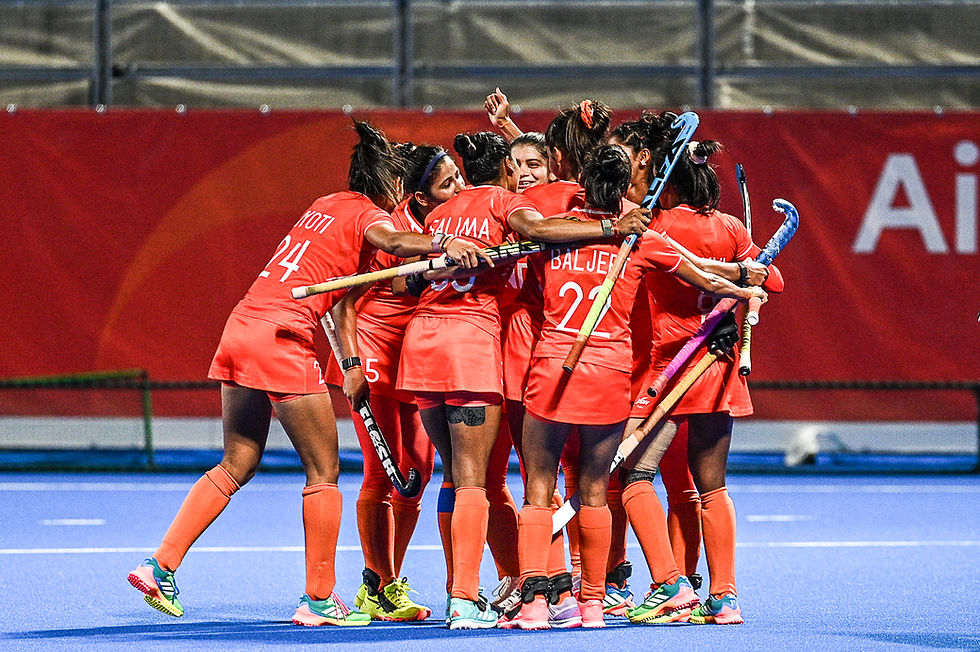
Image: Pixel Sports
Forty four years after the 1982 triumph, India are Asian Games champions again. The final against China was decided by Lalremsiami’s goal in the 10th minute, but what followed was perhaps even more important: fifty minutes of discipline, courage and world class defending.
There has been a change in the way this Indian women’s hockey team plays. It has not happened overnight, and it is not only about scoring more goals or beating stronger teams. Over the last few months, especially through the FIH Hockey World Cup, India have shown that they can survive pressure. They can defend deep, stay organised and still keep their heads when the opposition keeps coming. That may sound like a small thing, but at the highest level of international hockey, it is often what separates a good team from a very good one.
The World Cup gave us the first real evidence. India opened their campaign against China, a team that has become perhaps the biggest problem for India in Asian hockey over the last few years. At the 2023 Asian Games in Hangzhou, China had beaten India 4-0 in the semifinal, ending India’s hopes of gold. In the 2025 Asia Cup, India lost 4-1 to China twice, once in the Super 4 stage and again in the final. There were also defeats in the Pro League.
India have had their good moments against China, including winning the 2024 Asian Champions Trophy final, but there was no doubt about one thing: when the biggest Asian tournaments arrived, China had become the team India had to overcome.
That was why the World Cup opener mattered. India twice took the lead and China came back on both occasions. A 2-2 draw may not look dramatic on paper, but against the Olympic silver medallists it was a strong beginning. More importantly, India did not look afraid of China. They competed as equals and came away with a point.
Then came England. If there was one match from the World Cup that showed how much this team had grown defensively, it was the goalless draw against England. India needed at least a point to stay alive in the competition. England needed to win. That changed the nature of the game completely.
The first half was fairly balanced, but after the break England started coming in waves. India were pushed deeper and deeper. The English attack entered the Indian circle 28 times and earned 12 penalty corners. India had to defend almost continuously during long periods of the second half.
But they did not break. Savita made important saves. Bichu Devi produced a crucial stop late in the match. Salima Tete put her stick and body into dangerous situations. The defensive line kept blocking shots and clearing penalty corners. England even removed their goalkeeper late because only a victory would take them through, but India still held on.
It finished 0-0. There was no winning goal to celebrate, but for anyone watching closely, that was a very important Indian performance. It showed that this team could defend under pressure against a strong European side and still remain composed. India eventually finished fifth at the World Cup, their best finish in 52 years, and that tournament quietly became the preparation for something even bigger a few weeks later.
When India arrived in Japan for the Asian Games, the target was very clear. Gold meant history, but it also meant direct qualification for the Los Angeles 2028 Olympic Games. The last time the Indian women had won Asian Games gold was in New Delhi in 1982. They had reached the final in 1998 and again in 2018, but both times returned with silver. Forty four years is a very long wait.
India began the tournament exactly as a title contender should. Uzbekistan were beaten 19-0, Indonesia 17-1 and Thailand 20-1. Those matches allowed India to attack freely, but the real test of the pool stage came against hosts Japan. India won 3-1, a far more important result than the huge scores against the lower ranked sides.
They then completed the pool stage with a 7-0 victory over Singapore. Five matches, five wins and a goal difference of plus 63. India had done everything expected of them and finished on top of Pool B.
The semifinal against South Korea was different. Korea defended compactly and frustrated India for a long time. India had possession and territory but could not find the breakthrough during the first half.
This was exactly the sort of match where anxiety can slowly enter a team. The longer it remains goalless, the more every missed chance starts to matter. India stayed patient. Ishika finally broke the deadlock late in the third quarter before captain Salima Tete scored in the final quarter. A 2-0 victory took India into the Asian Games final.
And waiting there was China. The defending Asian Games champions. World number four. The same team that had beaten India 4-0 in the previous Asian Games semifinal. The same opponent that had defeated India twice at the 2025 Asia Cup. The same China that India had drawn 2-2 with at the World Cup only weeks earlier.
If India wanted to end the 44 year wait, there was probably no more appropriate opponent to beat.
China started with more possession, but India created the first real chance. Then, in the 10th minute, came the goal that would eventually decide the Asian Games.
Salima started the move with a strong run and combined with Sakshi Rana inside the circle. Sakshi found Lalremsiami, and from a difficult angle she produced a superb reverse stick hit. The ball flew high into the Chinese goal. Lalremsiami was playing her 200th international match, and she had just scored perhaps the most important goal of her India career. India led 1-0.
Ten minutes played. Fifty still to survive. And that is where the real story of the final began.
China responded exactly as expected. They pushed India back and started getting more circle entries. In the second quarter, the pressure became serious. A penalty corner came in the 19th minute, but India defended it. Another followed and Navneet produced a goal line save. Then China got the biggest possible opportunity: a penalty stroke.
Savita stood in goal. Zhang Ying stepped up for China. Savita went to her left and stopped it.
That save deserves to be remembered alongside Lalremsiami’s goal because the final could easily have changed at that moment. At 1-1, with China already controlling possession, momentum would have swung completely towards them. Instead, Savita kept India in front.
China kept coming. By half time they had enjoyed more possession and more entries into the Indian circle. India did not panic. They stayed narrow, protected the dangerous central areas and forced China to keep searching for another way through.
Shilpi Dabas made an important interception close to goal. Navneet kept dropping deeper to help. Salima was everywhere, pressing one moment and defending the next. It was not beautiful hockey in the usual sense. There were no long spells of Indian possession, no constant attacking moves. It was something else. It was a team understanding exactly what the situation demanded.
The third quarter brought another nervous moment. China were initially awarded a second penalty stroke after the ball appeared to hit Navneet’s foot. India referred the decision immediately. The video review overturned the stroke and reduced it to a penalty corner.
Salima then blocked the resulting flick with her flat stick and hurt her hand while doing it. That one sequence probably tells you everything about the Indian approach that evening. Every ball mattered. Every block mattered. Every player was prepared to defend the lead.
By the end of the third quarter, China had made 21 circle entries compared with India’s nine. Normally statistics like those make you nervous. Yet the scoreboard still read India 1, China 0. The final fifteen minutes were about courage rather than numbers.
China threw players forward. India dropped back when they needed to, but they never became completely chaotic. That is important. There is a difference between defending and simply surviving.
India were under huge pressure, but the defensive structure remained there. Players kept their positions. The tackles were mostly clean. Sticks went into the passing lanes. Savita remained calm behind everyone. China had the ball, but India kept asking them to find one more pass, one more touch, one more opening.
The minutes slowly disappeared. Ten left. Five. Then the final hooter. India 1, China 0. Forty four years later, Indian women’s hockey had its Asian Games gold again. The victory also secured direct qualification for the Los Angeles 2028 Olympics.
The easiest way to remember the final is Lalremsiami’s reverse hit in the 10th minute. It was a beautiful goal and it decided the scoreline. But perhaps the bigger story was everything that happened after it.
For fifty minutes, India protected one goal. Against China. In an Asian Games final. With Olympic qualification attached to it. That is not easy.
The England match at the World Cup had already shown us what this team could do without the ball. Twelve penalty corners defended, 28 circle entries survived and a clean sheet under huge pressure. The Asian Games final was the next step. This time there was not merely a draw to protect. There was a gold medal sitting on that 1-0 scoreline.
Savita’s penalty stroke save will naturally be one of the pictures of the victory, but the defence was much more than one goalkeeper.
Navneet cleared one from the line. Salima blocked penalty corners and took a painful hit. The defenders protected the centre, covered each other and kept their discipline. Even the forwards worked backwards. It was collective defending in the truest sense.
For many years, conversations around Indian hockey have often focused on skill, flair and attacking talent. This team has all of that. Lalremsiami, Deepika, Navneet, Salima, Sunelita and others can hurt teams going forward.
But this year they added something just as valuable. They learned how to be uncomfortable. They learned how to win when the ball belonged to the opposition. That is a quality every world class team needs.
The World Cup was proof. England could not break them. Australia could not score against them either in another 0-0 draw. China had to come from behind twice just to earn a 2-2 draw in the opening match. India eventually finished fifth, their best World Cup result in 52 years. Then, a few weeks later, the same defensive confidence travelled to Japan.
There will be bigger challenges ahead. LA 2028 is still some distance away and the teams India will meet there will punish even small mistakes. India still need to improve their control of possession against the very best sides, create more chances under pressure and become more clinical from penalty corners. One Asian Games gold does not suddenly solve everything.
But it changes belief.
China had become the biggest obstacle in Asian hockey for India. In Hangzhou, they had stopped India’s gold medal dream with a 4-0 semifinal win. In the 2025 Asia Cup, they beat India twice by 4-1. At the 2026 World Cup, India stood up to them and drew 2-2. Then came Nagoya.

This time, India scored first. This time, when China came after them, they did not give the goal back. And this time, at the end of sixty minutes, it was India standing on top of Asia.
For Lalremsiami, the 200th international became unforgettable. For Savita, one dive to the left became part of Indian hockey history. For Salima Tete and the rest of the team, the medal ended a wait that had lasted longer than any of them had been alive.
Ten minutes to score. Fifty minutes to defend it. Forty four years to get it back.


Comments