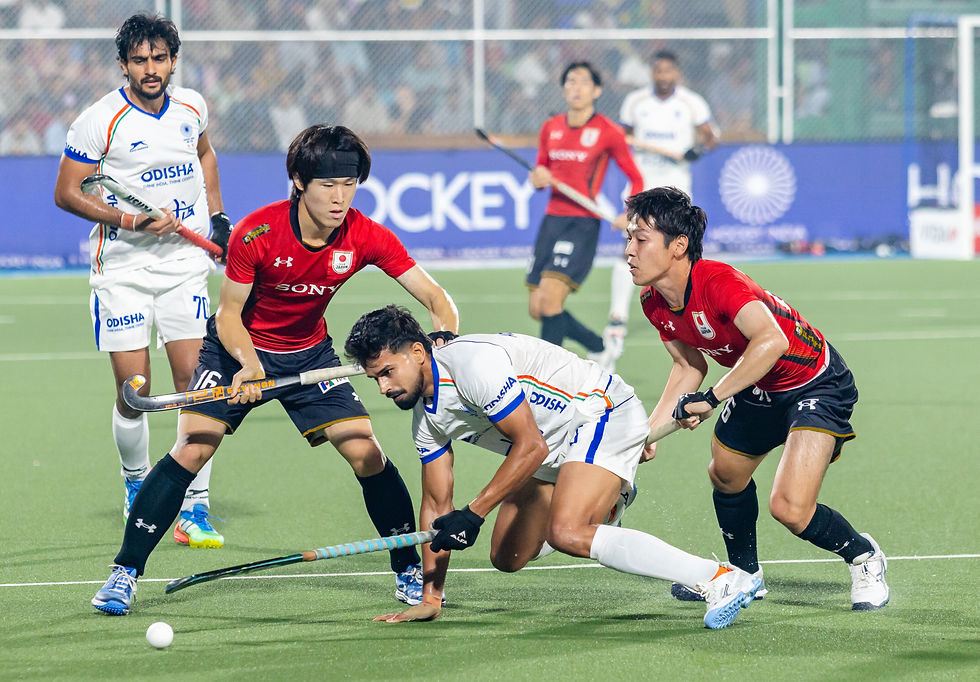
India Beat Japan 4-1 to Win Sixth Asian Champions Trophy Title After Second-Half Comeback
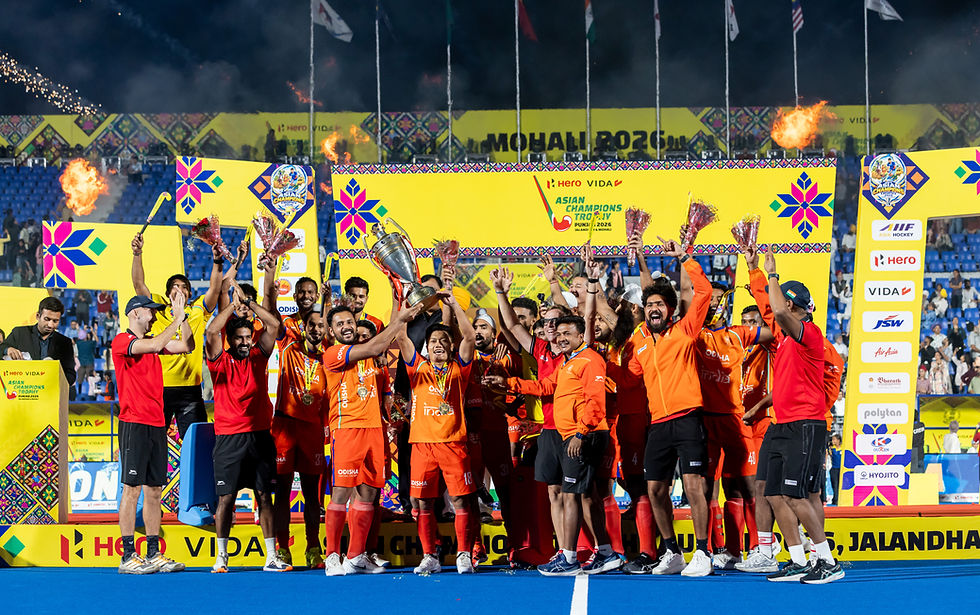
Image: Hockey India
Mohali, November 5: India came from a goal down to defeat Japan 4-1 in the final of the Hero Men's Asian Champions Trophy Punjab 2026 at the Olympian Balbir Singh Senior International Hockey Stadium in Mohali on Thursday. The victory gave India their record-extending sixth Asian Champions Trophy title and third consecutive crown, completing an unbeaten campaign for Craig Fulton's side.
Shilanand Lakra, Dilpreet Singh, Jugraj Singh and Sukhjeet Singh scored for India after Japan had taken an early lead through Kazumasa Matsumoto. The hosts were made to work hard for much of the contest, with Japan defending effectively and keeping the Indian forwards away from clear scoring opportunities during the first half. However, India's improved movement and greater attacking intensity after the interval eventually changed the match.
Japan made an excellent start and went ahead in the third minute. Hiro Saito played the ball into the path of Matsumoto, who entered the circle from the right and struck a powerful reverse hit past Indian goalkeeper Suraj Karkera. The early goal gave Japan confidence, and they were able to maintain a disciplined defensive structure while India tried to find a response.
India gradually began to enjoy more possession but struggled to create meaningful openings. Nilakanta Sharma picked out Abhishek with a long diagonal pass in the ninth minute, although the forward's reverse-stick attempt went wide. Dilpreet Singh was unable to control a promising pass from Jugraj Singh soon afterwards, while Hardik Singh also tested Japanese goalkeeper Kisho Kuroda from the edge of the circle.
Japan's organisation continued to frustrate India during the second quarter. The visitors marked closely inside their defensive circle and reduced the space available to the Indian forwards. They also earned two penalty corners, but India managed to deal with both opportunities. Despite entering the Japanese circle regularly, the hosts could not win a penalty corner during the opening half and went into the interval trailing 1-0.
India returned after half-time with greater purpose and began to put sustained pressure on the Japanese defence. Captain Harmanpreet Singh tested Kuroda from a penalty corner, but the goalkeeper was equal to the effort. Another opportunity followed, with Kuroda producing an excellent save with his right foot to deny Harmanpreet once again.
The equaliser finally arrived in the 42nd minute through a well-worked penalty-corner variation. Harmanpreet moved the ball towards Sukhjeet Singh, whose attempt was blocked. Dilpreet collected the rebound and found Aditya Arjun Lalage near the baseline. Aditya sent the ball back into the danger area, where Shilanand Lakra applied the finishing touch. Japan challenged the decision through a video referral, but the goal stood.
The equaliser changed the balance of the contest. India began moving the ball with greater confidence and found more space in the Japanese half, while the visitors were increasingly forced to defend deeper. The pressure produced a second goal in the 48th minute when Hardik regained possession after an initial pass was blocked and played the ball to Dilpreet. The forward turned inside the circle and finished to give India their first lead of the evening.
Japan attempted to respond, but India were now playing with much greater control and continued to create opportunities. In the 53rd minute, Jugraj Singh converted a penalty corner with a powerful drag-flick to extend the lead to 3-1. Just a minute later, Vivek Sagar Prasad sent a firm delivery towards goal from the top of the circle, and Sukhjeet Singh redirected it into the net to make it 4-1.
Three goals in seven minutes during the final quarter effectively settled the contest. Japan had defended well for almost three quarters, but India's pressure and improved execution eventually proved too much for the visitors. The hosts continued to maintain their attacking approach while also restricting Japan's opportunities to get back into the match.
There was a late opening for Matsumoto when Indian goalkeeper Krishan Bahadur Pathak was away from his line, but the defence recovered to clear the danger. Japan also earned a penalty corner with only seconds remaining, although captain Raiki Fujishima failed to find the target. The final whistle confirmed India's sixth Asian Champions Trophy triumph.
The victory completed a dominant tournament for India, who had won all five of their league-stage matches before defeating South Korea 8-1 in the semi-final. Although Japan gave them one of their toughest challenges of the campaign, the hosts showed the ability to respond after falling behind and finished the tournament without a defeat.
The final was also significant for midfielder Nilakanta Sharma, who played his last international match after announcing that the Asian Champions Trophy would be his final tournament for India. Having served the national team for several years, Nilakanta ended his international career with another major continental title.
Hardik Singh also reached an important personal milestone, making his 200th senior international appearance in the final. His contribution in midfield remained important, particularly during the second half when India began to find more space and move the ball more effectively through the Japanese defensive lines.
Captain Harmanpreet Singh finished as the tournament's leading scorer with ten goals and received the Hero of the Tournament award. His tally also took him to 250 senior international goals. Goalkeeper Krishan Bahadur Pathak was named Goalkeeper of the Tournament, recognising his contribution during India's unbeaten campaign.
India's triumph followed their Asian Games gold medal in Nagoya earlier in the year and provided another indication of the team's consistency in continental competitions. While the final score suggested a comfortable victory, Japan had shown that India could still be challenged by a disciplined defensive unit. The hosts required a much stronger second-half performance to turn the match in their favour.
For head coach Craig Fulton, the result was particularly encouraging because of the team's response after a difficult opening half. India remained patient when opportunities were limited, improved their attacking movement after the break and made decisive use of their chances in the final quarter.
The victory brought the Asian Champions Trophy back into Indian hands for the third successive edition and ensured that the hosts finished the Punjab tournament as deserving champions.